
Douglas Fowley
Armored Car Robbery | Dir. Richard Fleischer | 1950 | 68 mins

Film noir is full of losers of all shapes and sizes but there is one reoccurring motif that is central to the genre: the femme fatale and the patsy boyfriend. Frequently these figures were the main focus of the narrative, played by the stars of the day in performances now regarded as near mythic. But then there’s the smaller stories of beguilement and betrayal which appear occasionally within other nefarious plots. One such bitter side dish is the tale of Yvonne LeDoux (Adele Jergens) and loser extraordinaire Benny McBride (Douglas Fowley) in Armoured Car Robbery (1950), the plot of which is largely self-evident from the title.
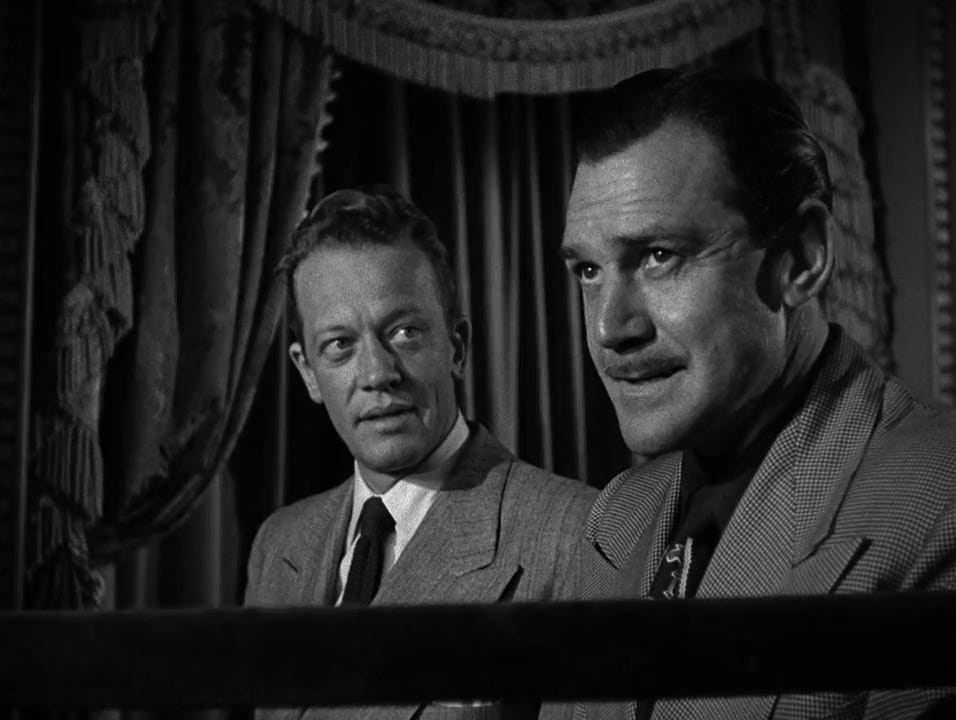
McBride and LeDoux are part of an entourage under the guidance of criminal mastermind Dave Purvis (William Talman), who has planned the job. His reputation ensures he quickly puts a team together, but things unravel fast and everyone is soon on their own downward trajectories. McBride is the first member of the gang we meet and from the moment he’s on screen, ogling his wife LeDoux as she performs her salacious burlesque act in a seedy theatre, we can tell he’s a loser. Fowley brings just the right amount of desperation and longing to his facial expression to let the audience know who they are dealing with. He is joined by Purvis who confirms McBride’s forlorn status by saying he thought he’d find him here. Then Fowley starts blurting out a series of staccato statements admitting his hopeless slavery to LeDoux, even though he knows she’s cheating on him. The dialogue is so ridiculously hard-boiled, and Fowley delivers it with such sincerity that it’s a joy to watch and the first indication that this is going to be a noir to remember.
The two men move to the theatre bar where the ever cautious Purvis demands McBride assign his latest change of address to memory. LeDoux turns up and McBride tries to win her over by explaining he’s going to be in the money. Her subsequent disinterest and rejection leaves him so distracted with anxiety he has to write down the address he just memorised, not a good idea. Benny’s notion that the allure of big money will keep his betrothed by his side even though she loathes him sets him apart from the other partners of femme fatales. They at least have the excuse of being duped, but LeDoux couldn’t make her revulsion any clearer, even if he gets the money, he’s never winning her back, he’s lost before he’s begun. In fact, she’s a femme fatale by default, she’s not even trying.
From here on in McBride’s story nose dives into oblivion, in the next scene we learn LeDoux has hooked up with Purvis, who sums up Benny as “expendable”, which doesn’t bode well. He gets himself shot during the robbery and suffers the additional distress of being slapped awake by Purvis as they bluff their way through a police roadblock. The way Fowley narrows his eyes in determination and says “OK” after Purvis demands he “get it together” gives Benny a rare moment of strength and dignity. Fowley is a master of these small facial expressions, managing to convey aspects of character in a flash. Earlier, during the scene where the other gang members are introduced to each other, McBride shoots a look at Purvis which conveys a healthy dose of admiration and pride in being his associate. If only he knew what we knew.
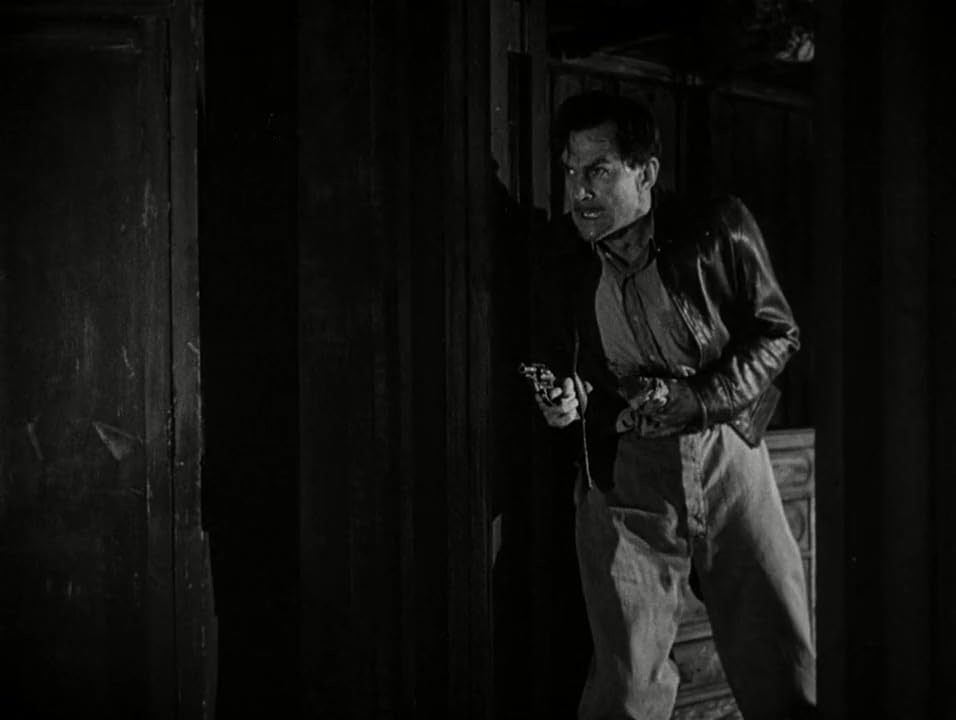
The gang finally make it to their first hideout, the aptly named Terminal Shipyard. They are meant to be traveling by motor-boat over to Mexico but Benny, who is deteriorating by the second, is holding them up. Purvis has zero sympathy for his loyal companion, refusing to get him a doctor and even suggesting a burial at sea to the others. Benny has other ideas and, in the film’s darkest moment, bursts in on Purvis from the adjoining room with a gun in his hand, demanding his share of the money so that he can split and find himself a doctor. He moves into the room slowly, his sweaty features grotesquely transformed by the increasing intensity of light from the portable lamp he’s staggering towards. Purvis tells him that his actions will get them all “in a jam”, to which McBride sputters: “I’m in a jam now, I’m dying!” His face that of a leering ghoul. Purvis informs him he’ll get everything he’s entitled to and promptly puts three bullets in him. The camera swings down for one last brief look at that face, frozen into something comic and horrific. Benny McBride is dead.
The rest of the film sees dogged police lieutenant Jim Cordel (Charles McGraw) relentlessly pursue the remainder of the gang, looking for payback for the death of his partner, killed by Purvis during the robbery. McBride inadvertently achieves his own posthumous revenge when Cordel tracks down Purvis after finding the address McBride wrote on the scrap of paper in the theatre. Director Richard Fleischer handles the action with a distinctive heightened realism, prioritising expressive diegetic sound over musical score to provide atmosphere and tension: the crowd’s cheering in the robbery scene and the relentless foghorn blasts during the stake out at Terminal Shipyard being stand out examples. The term heightened realism could also be used to describe Douglas Fowley’s portrayal of McBride. Much like the film’s star, Charles McGraw, Fowley seemed uniquely at ease with the film’s baroque dialogue, having a manner inherently suited to B movie noirs. He was also perhaps uniquely suited to play Benny McBride; his general look and demeanour are perfect for the role. Maybe that’s just a roundabout way of acknowledging just how good his performance is, as his work here is some of the best the genre has to offer.
Sandy Milroy.