
Timothy Carey
Crime Wave | Dir. André de Toth | 1954| 74 mins

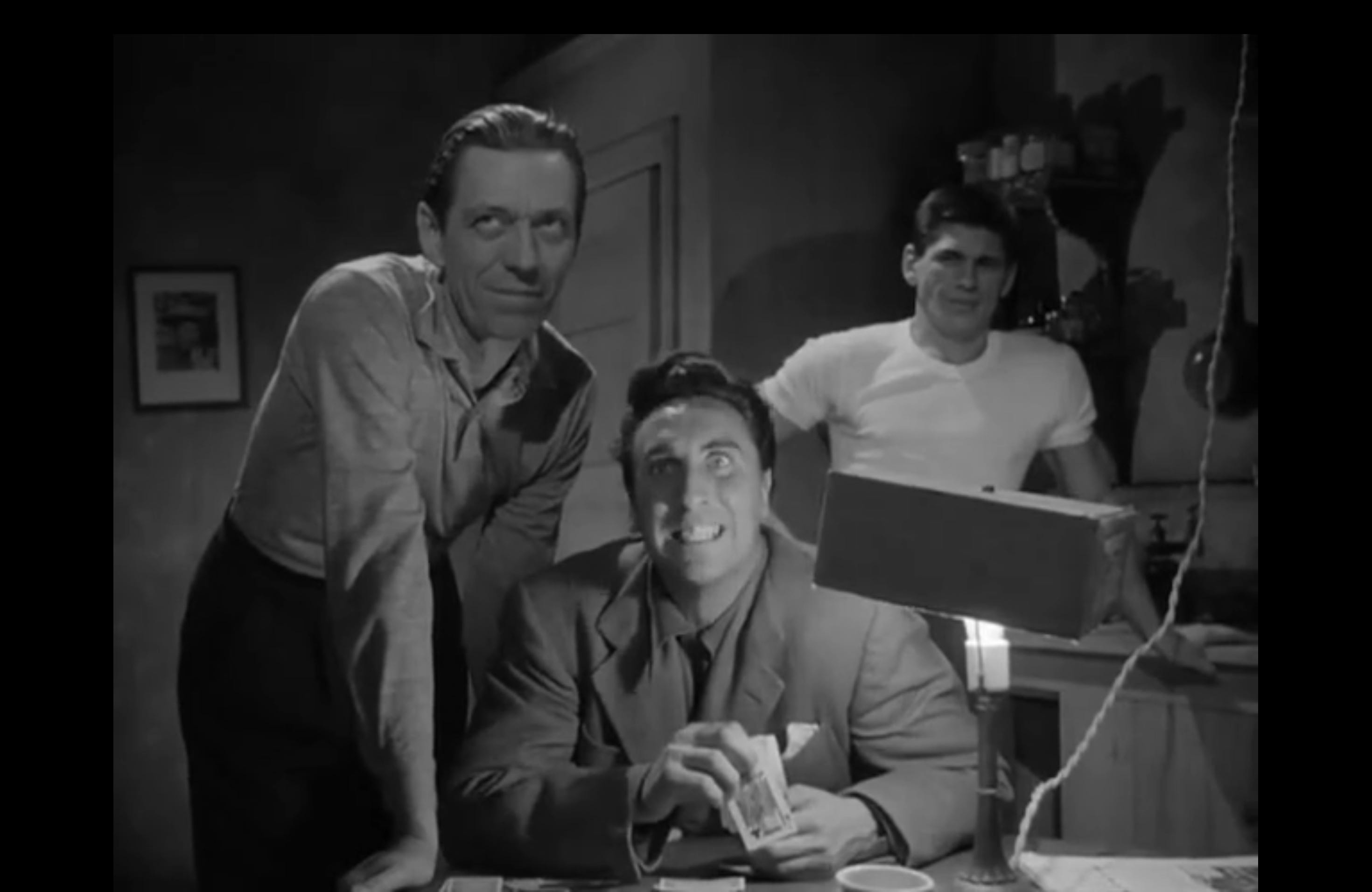
Directed by André de Toth––whose noir pedigree had been verified eliciting the darkest Lizabeth Scott femme fatale performance in Pitfall (1948)––Crime Wave (also known as The City is Dark) follows the classic noir premise of a reformed ex-con fatally pulled back into a crime world they desperately want to elude. Steve Lacey (Gene Nelson), with his wife Ellen Lacey (Phyllis Kirk), is the fall guy who must prove his innocence to Detective Lieutenant Sims (Sterling Hayden), a gnarly, toothpick-chewing cop with apparently little sympathy for ex-cons. The main focus here is the legendary Timothy Carey, whose extraordinary presence electrifies every scene he appears in. Before then some plot details: three escaped criminals robbing a gas station for “eatin’ money” are interrupted by a lone cop; one of them takes a bullet to the gut, the cop gets killed. On the run, they look for shelter at Steve’s, who served time with them at San Quentin before going straight.
For Detective Sims cop-killing is as low as it gets. He figures out who the criminals are and sets up a police dragnet to flush them out, a plot device that gives de Toth ample opportunity to film the quotidian backstreets of LA in an arrestingly realistic faux-documentary light. The wounded criminal makes his way to Steve’s but dies before he can get treatment. Now Steve has a problem. Detective Sims, following the trail, is convinced Steve can tell him something and has no time for redemption stories: “once a crook always a crook”. All Steve wants is to be left alone with Ellen, his loving and supportive wife, but when the remaining two criminals arrive at his house later on, he realises that he must, reluctantly, play it their way if he doesn’t want to lose Ellen and his safe job as an aeroplane mechanic. Ellen is pretty, sincere, resourceful, intelligent––everything the criminals have buried deep inside or abandoned: “where we come from, we don’t see girls like you”. ‘Doc’ Penny (Ted de Corsia) and Ben Hastings (an early-career Charles Bronson), bring an ominous and deeply palpable threat to Ellen that will become a recurrent motif throughout the film––the jeopardy that compels Steve to follow Doc’s ruinous plans.
With Sim on the chase, Doc leads Steve, Ellen, and Hastings to a safe house where another bunch of ex-cons are hiding out. Here we first encounter the crazed, grinning Johnny Haslett (Timothy Carey) whose characteristic long ghoulish face and heavy-lidded eyes light up with lecherous glee when Ellen arrives. If the uncredited role is the definition of a ‘minor’ performance, Carey bursts through the confines of this particular role in an excessive rendition of violent intensity, effortlessly stealing his few scenes from the ignominy of forgettable bit-part grift. Doc threateningly signals that Johnny has an interest in Elle and Johnny’s insidious snickering response, through trademark grating teeth, means trouble pure and simple: “Yeah, we know a good doll when we see one, don’t we Steve?”. Doc Penny wants Steve to help with a bank robbery and their escape by flight to Mexico. Elle is forced to stay with the deeply troubling Johnny as insurance for Steve’s compliance.
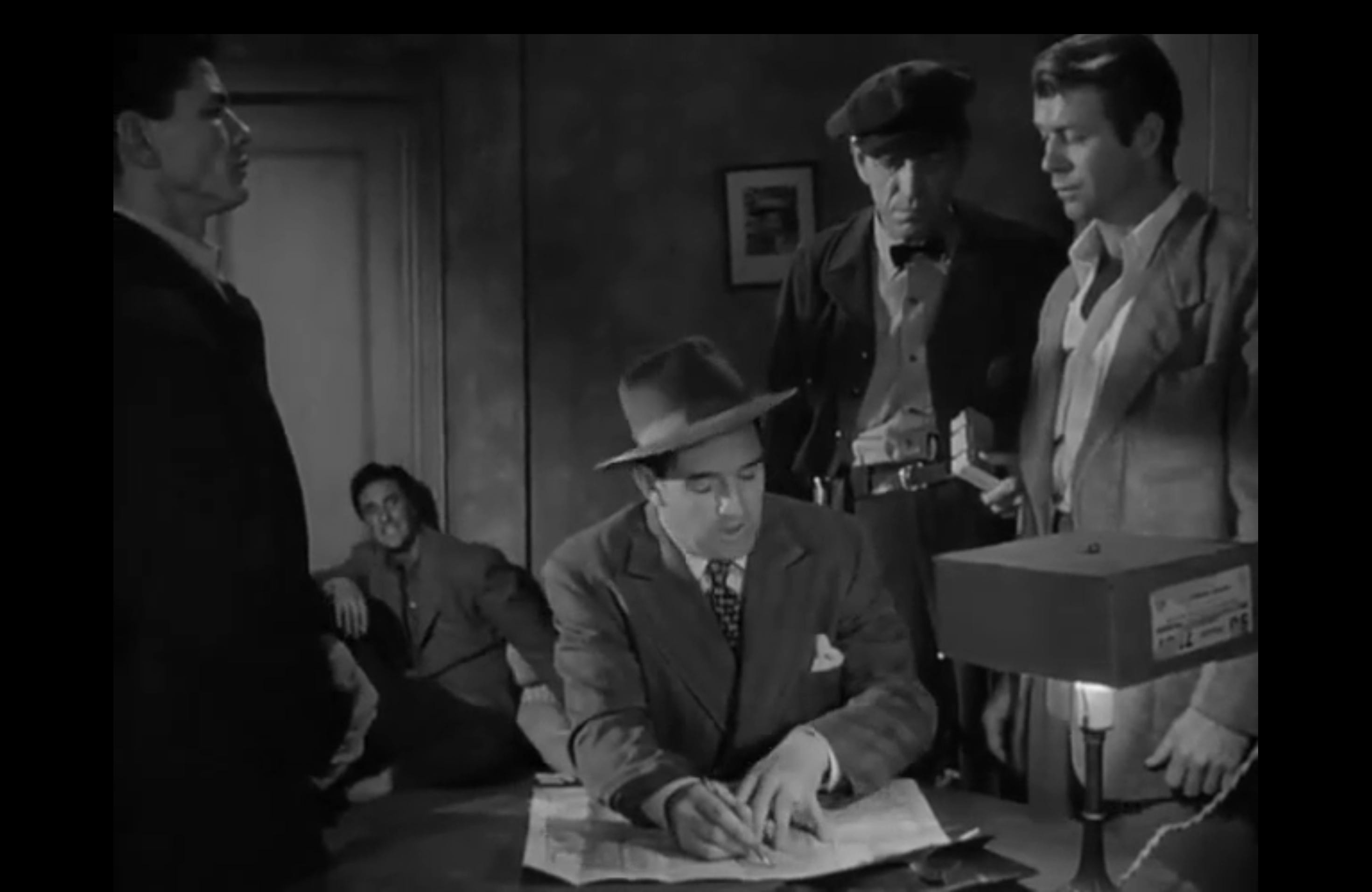
There’s an incredible scene where Doc, seated, plans the bank robbery with the gang members standing on either side of the safehouse table. Framed in the background is Johnny, sitting on the back wall, grinning maniacally, painfully agitated, cigarette in constant movement, seemingly desperate to dominate the scene despite his residual status in it. Steve wants to say goodbye to Ellen before leaving for the bank heist, but Doc won’t allow it. Johnny’s leery, mocking response, in his strangely breathless staccato voice, is not reassuring: “I’ll give her your love Steve”. The heist is chaos and then Steve desperately racing back to the safehouse to prevent Johnny’s increasingly forceful advances on Ellen––the car POV revealing the banality of LA’s mixed-use industrial and residential suburban urbanism far from the glamour of the city. Steve catches Johnny just in time. The ending I leave for readers to assess.
Carey worked for Billy Wilder, Stanley Kubrick, John Cassavettes, Elia Kazan, Marlon Brando and Bob Rafelson among others. He could act. But it also true to say that he did ‘crazy’ like few others, not least in real like where he faked his own kidnapping on the set of Kubrick’s Paths of Glory (1957) to generate personal publicity. In a film premised on the fear and jeopardy of loss––Steve’s new ‘straight’ life, his decent job, his lovely wife, his rehabilitation––de Toth’s choice of Carey as an embodiment of latent violence emerging from a befouled past is masterful. In the few sequences Carey is on the screen his volatile and salacious presence threatens the existential order that Steve and Ellen have fought so hard to obtain, adding hazard, unpredictability, and brute vitality to one of the two great noir films de Toth left behind.
Neil Gray.
One of the great supporting casts of thugs in Noir history